
Supply Chain Resilience: Lessons Learned from Global Disruptions
Supply chain resilience has replaced pure efficiency as the primary goal for global industries. By embracing multi-sourcing, nearshoring, and digital tools like AI and Digital Twins, companies are building "self-healing" networks. The shift from "Just-in-Time" to "Just-in-Case" ensures that even when the next global shock hits, the flow of goods—and business continuity—remains intact.
For decades, the global supply chain was built on a single, uncompromising principle: Efficiency. The "Just-in-Time" (JIT) model, perfected in the late 20th century, aimed to minimize waste and inventory costs by having materials arrive exactly when they were needed.
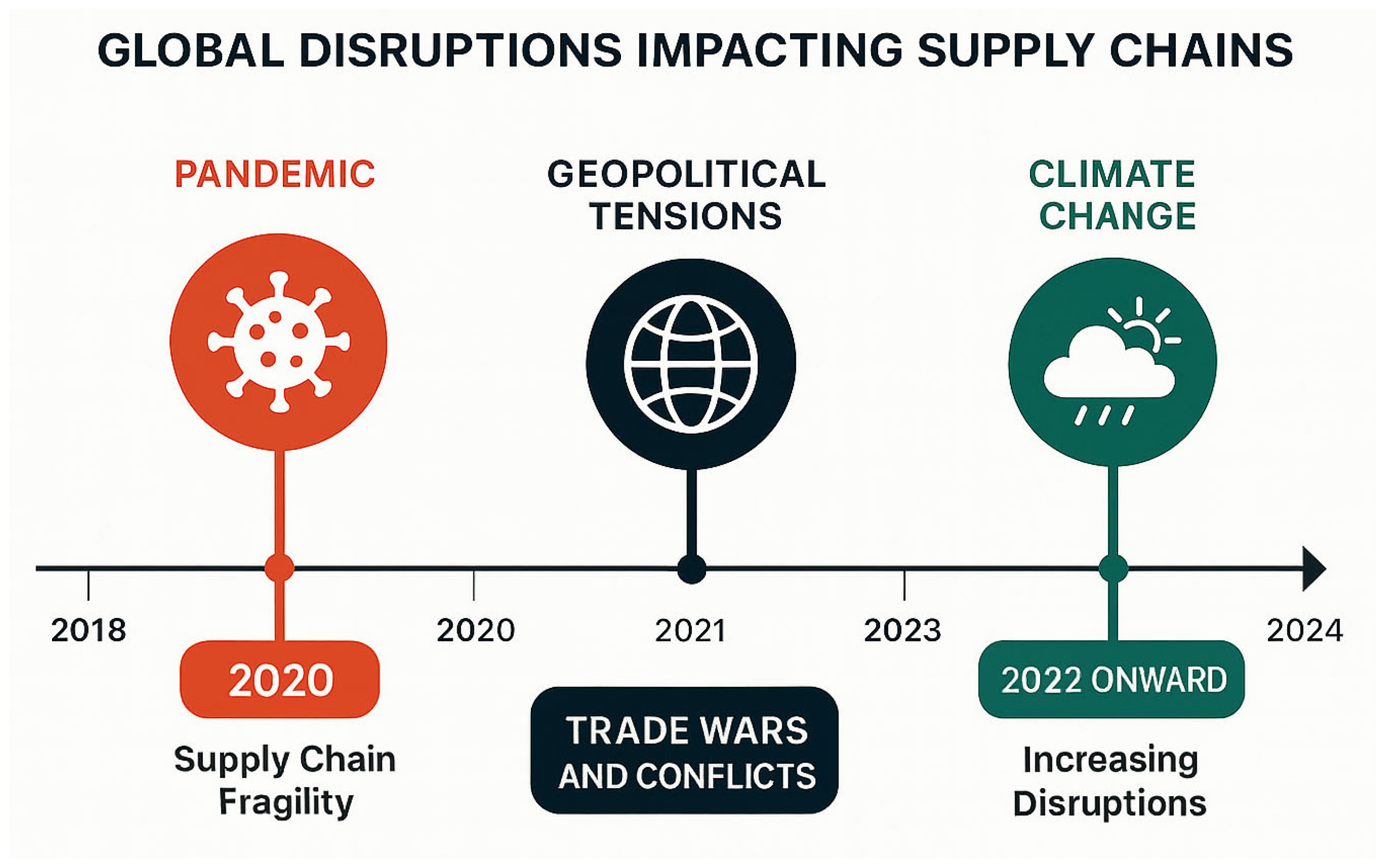
However, the events of the early 2020s—from the pandemic to the Suez Canal blockage and escalating geopolitical tensions—revealed a hidden cost to this lean approach. The global supply chain wasn't just efficient; it was brittle. As we move through 2026, the priority has shifted from "Just-in-Time" to "Just-in-Case." Resilience is no longer a luxury; it is a competitive necessity.
The Architecture of Resilience
Modern supply chain resilience isn't about avoiding disruptions—it’s about the speed of recovery. To build this, companies are moving away from monolithic, single-source networks toward a "mesh" architecture.
1. Multi-Sourcing and Geographic Diversification
The most painful lesson learned was the danger of over-reliance on a single geographic node, particularly China. Companies are now adopting "China Plus One" strategies, diversifying their manufacturing base across Southeast Asia, India, and Eastern Europe. If one region experiences a lockdown or a natural disaster, the entire network doesn't collapse.
2. The Rise of Nearshoring and Friend-shoring
Distance equals risk. To combat shipping delays and skyrocketing freight costs, businesses are moving production closer to their end consumers—a trend known as nearshoring.
For the US: Mexico has become a primary hub for electronics and automotive assembly.
For Europe: Turkey, Morocco, and Poland are seeing surges in manufacturing as brands seek to shorten the physical length of their supply chains.
3. Buffer Stock vs. Lean Inventory
While carrying extra inventory is expensive, the cost of a "stockout" is often higher. Companies are re-evaluating their most critical components (like semiconductors or active pharmaceutical ingredients) and maintaining a "strategic reserve" to weather short-term shocks.
Technology: The Digital Nervous System
You cannot fix what you cannot see. The "black box" of the traditional supply chain is being replaced by End-to-End (E2E) Visibility tools.
Digital Twins: Leading manufacturers now use "Digital Twins"—virtual replicas of their entire supply chain. These allow managers to run "what-if" simulations. What if a major port in Singapore closes for a week? The digital twin can instantly calculate the ripple effect on every order and suggest alternative routes.
AI-Driven Predictive Analytics: Instead of reacting to a delay, AI models now scan for early warning signs—from weather patterns and labor strikes to subtle changes in commodity pricing—allowing logistics teams to reroute cargo before a bottleneck even forms.
Blockchain for Traceability: As ethical and environmental regulations (like ESG mandates) tighten, blockchain provides an immutable record of where every component came from, ensuring compliance and building consumer trust.
Sustainability as a Shield
Interestingly, resilience and sustainability are becoming two sides of the same coin. A supply chain that is shorter (nearshored), uses less energy, and relies on circular economy principles (recycling and refurbishing) is inherently less vulnerable to external shocks like fuel price spikes or carbon taxes. By optimizing for the planet, companies are inadvertently making their networks more robust.
Conclusion: The New Normal
The global disruptions of the last few years served as a massive "stress test" for the world's economy. The companies that survived and thrived weren't the ones with the lowest costs, but the ones with the most agility. Moving forward, the goal of supply chain management is no longer just to be the fastest or the cheapest—it is to be the most unshakeable.